A small team does not need to publish on every platform to stay visible online. Start with one customer question, publish a useful answer on your website, and adapt it for one channel your customers actually use. The plan below shows how to do that without turning every post into another sales pitch.
Updated September 13, 2026. This is a planning example, not a client case study or a promise of rankings, inquiries, or inclusion in AI-generated answers. The sample business, schedule, messages, and results are fictional.
Choose a Question That Changes a Customer’s Next Step
Review recent inquiries with the person who answers them. Look for a question that repeatedly delays a decision, creates a misunderstanding, or requires the same explanation. Remove customer names and private details from the editorial notes. Select something your team can answer with evidence it owns or has permission to publish.
For our fictional website studio, the question is: What should I prepare before asking for a website quote? The answer is not a list of the studio’s services. It is a short brief the customer can complete before speaking with any supplier.
| Brief field | Worked example |
|---|---|
| Customer task | Request a catering estimate from a phone. |
| Required information | Event date, approximate guest count, service location, and preferred contact method. |
| Content owner | The business owner supplies the menu and approved event photographs. |
| Workflow owner | The office coordinator receives the inquiry and confirms receipt. |
| Acceptance check | A labeled test inquiry reaches the coordinator with every required field. |
| Unresolved decision | Is the website taking payment or only requesting an estimate? |
That final question matters: a payment workflow and an inquiry form require different decisions. An answer with this distinction helps readers prepare, even if they never hire the studio.
Write the Website Answer Before the Social Posts
Give the answer one permanent home. Begin with the customer’s task, show the completed brief, explain the unresolved decisions, and provide a blank version of the same fields. Add the name of the person responsible for reviewing it and a meaningful revision date when information changes.
Before publication, ask a colleague who did not write it to complete the brief using a different business example. Record where they hesitate. If they cannot tell what belongs in a field, improve the example before distributing the article. This is an editorial check you can perform, not a test we claim to have run on your content.
Use One Main Channel and a Four-Week Schedule
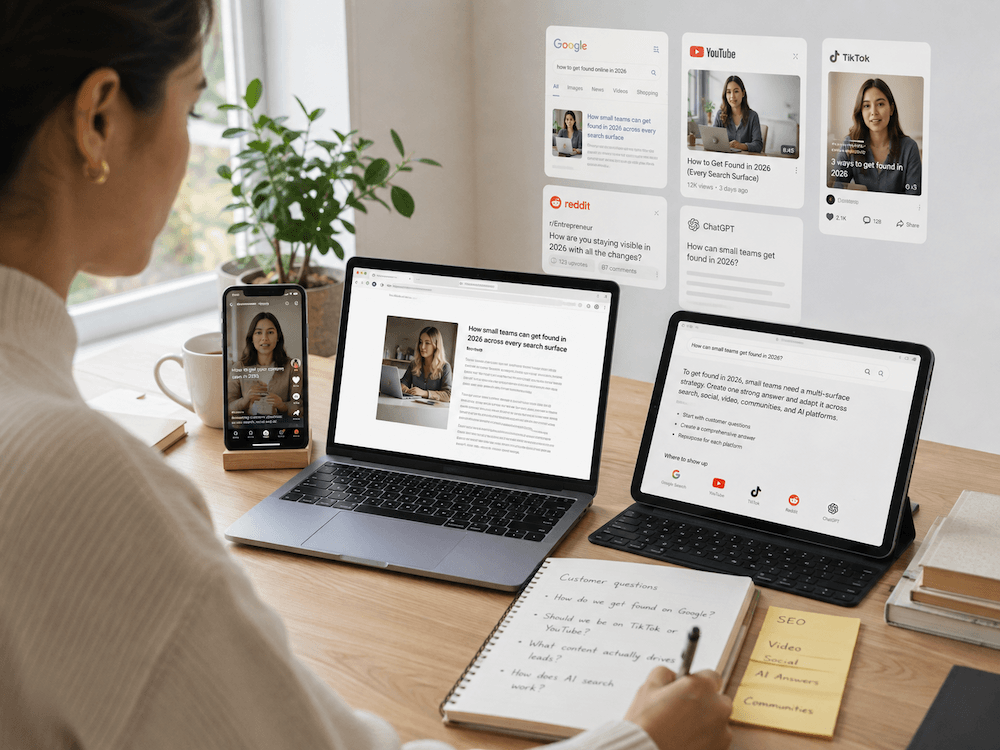
Choose a distribution channel using actual customer conversations, referral information, and the team’s ability to respond. In this example the studio chooses LinkedIn because its assumed audience is business owners already discussing website projects there. That is an example assumption, not evidence that LinkedIn is the best channel for every business.
| Week | Publish or review | Completion evidence |
|---|---|---|
| 1 | Publish the website brief and have a colleague review its clarity. | Working page URL, reviewer, and corrections recorded. |
| 2 | Share the distinction between an inquiry form and a payment workflow. | Published post and any substantive reader questions. |
| 3 | Record a short walkthrough of the fictional completed brief. | Video with captions checked and no private client information. |
| 4 | Review referral activity and inquiries; improve the original answer. | One documented keep, revise, or stop decision. |
The schedule is a manageable trial, not a ranking timetable. If the team can only produce the article and one post, do those well and move the video to a later cycle. Someone still needs to answer comments and maintain the original page.
Adapt the Message Instead of Copying the Whole Article
Sample social post: Before asking for a website quote, write down what happens after a visitor submits an inquiry. Who receives it? Which details do they need? An estimate-request form is not the same scope as online payment. Our example brief shows that difference before either party starts estimating the work.
Sample video outline: Show the fictional brief, highlight the customer task, trace the inquiry to the coordinator, and finish with the unresolved payment question. Keep the same facts as the article, but use the screen to demonstrate the relationship between the fields.
Provide enough substance that the post is useful without a click. Link to the full example when the channel supports it. In a community discussion, first answer the specific question and follow that community’s promotion rules; a relevant topic is not an invitation to paste a generic advertisement.
Treat AI Visibility as a Possible Outcome, Not a Deliverable
Google’s guide to generative AI search features says foundational SEO still applies and there is no special schema or AI text file required for those features. Meeting its requirements does not guarantee that a page will be crawled, indexed, or shown. This guidance is about Google Search, not a universal specification for every AI service.
For this plan, keep the brief readable as page text, make the example easy to inspect, and correct outdated details. Do not buy mentions or manufacture endorsements to make the business seem more authoritative. A useful answer should stand on its own rather than depend on a claim that an AI system will recommend it.
Measure Discovery Separately From Business Outcomes
With authorized Search Console access, review the page in the Search results Performance report. Record the date range, page, queries, impressions, and clicks. Keep these separate from social-platform views and inquiries recorded by staff. They describe different events, not interchangeable counts of customers.
Fictional review: The studio records eight social referral visits and two inquiries during its trial. Staff identify one inquiry as relevant to the studio’s work. That does not prove the social post caused the inquiry, and the sample is too small to establish a dependable conversion rate. The useful next question is whether the inquiry arrived with a clearer brief, not whether the team can advertise a success percentage.
- Keep the topic when readers use the example and the team can maintain it.
- Revise the answer when questions expose a missing decision, confusing field, or broken next step.
- Stop or reduce a format when production effort is high and the available evidence does not justify continuing. Record the limited sample rather than declaring the whole channel ineffective.
Attribution and Next Steps
The earlier version credited Neil Patel’s discussion of broader search discovery. His Search Everywhere Optimization article provides that author’s treatment of the idea. The brief, sample copy, schedule, and review decisions above are Supreme Line’s illustrative planning material, not reported results from his work.
Start by choosing one question and naming its reviewer. For help connecting the resulting content with your website and inquiry process, Supreme Line can scope a content and search review around what your team can actually maintain.